Top Prototype Class to Focus on Single, Two-Wheel Drive Platform; Options for Both Single-Source and Bespoke Chassis and Hybrid Powertrains
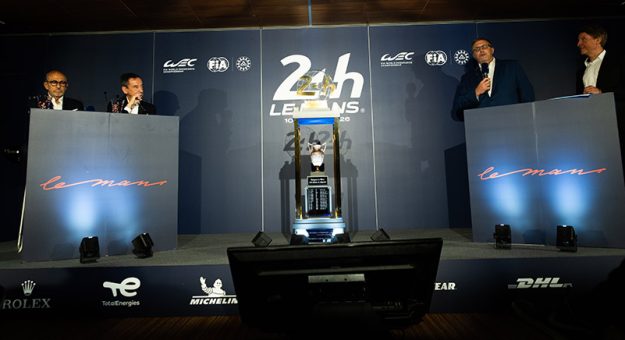
 DAYTONA BEACH, Fla. – As part of the annual Automobile Club de l’Ouest (ACO) press conference held on the eve of this weekend’s 24 Hours of Le Mans, officials from IMSA, the ACO and Federation Internationale de l’Automobile (FIA) outlined the framework for technical regulations that will govern the top class of prototype racing beginning in 2030.
The technical regulations – which will be used in the IMSA WeatherTech SportsCar Championship Grand Touring Prototype (GTP) class and the FIA World Endurance Championship (WEC) Hypercar class – will shift toward a single, two-wheel drive platform for all cars in the class. This marks a shift from current regulations that enable both rear-wheel drive and all-wheel drive prototypes to compete in the same class.
All prototypes will continue to use internal combustion engines together with hybrid powertrain systems. Manufacturers will have the option to use a single-source hybrid powertrain, as is the case for prototypes built to the current Le Mans Daytona h (LMDh) platform, or their own bespoke systems developed in-house, providing they adhere to the same specifications.
Manufacturers also will have the option of using a selected constructor to build its chassis – again following the LMDh model (Dallara, Ligier, Multimatic, ORECA) – or develop their own chassis in-house. Homologation of each prototype will be based on tight technical regulations and will be valid for at least five years with no performance evolutions.
Technical working group meetings between IMSA, ACO, FIA and the manufacturers and constructors will further define and finalize the regulations that will go into effect at the start of the 2030 season.
JOHN DOONAN, IMSA President: “The current era of prototype racing has demonstrated what’s possible when stakeholders come together with a shared vision. Our responsibility now is to carry that momentum forward and create the conditions for long-term success. Today’s announcement is an important milestone.
“Having a single, global technical regulation for top-class prototype racing is a win for everyone involved – the sanctioning bodies, manufacturers, teams, drivers, corporate partners, suppliers and, most importantly, the fans. For manufacturers, it creates a clear pathway to compete at the highest level of endurance racing around the world under a common set of regulations. For teams, it brings stability and confidence as they plan and invest for the years ahead. And for the fans, it helps ensure that the world’s leading automotive brands continue to compete head-to-head on some of the biggest stages in motorsport.”
ED BENNETT, IMSA CEO: “Throughout our discussions around the 2030 regulations, IMSA, the ACO and the FIA remained focused on the same goals: managing costs responsibly, maintaining manufacturer relevance and creating opportunities for broad participation across the sport. What has been especially encouraging is the spirit of collaboration that has brought us to this point. As we move into the next phase of development, that collaboration will continue through technical working groups that include IMSA, the ACO, FIA, manufacturers and constructor partners. Their input will be critical as we work together to shape the details of the regulations and build on the strong foundation that already exists today.
“Today’s announcement gives everyone a roadmap for the future, supports continued value and return on investment and reinforces our collective commitment to ensuring that top-class endurance racing remains healthy, competitive and globally relevant for years to come.”