Industry and Academic Leaders Unite to Help Develop the Next Generation of Motorsports Professionals
DAYTONA BEACH, Fla. – On the heels of the IMSA WeatherTech SportsCar Championship Michelin GT Challenge weekend at VIRginia International Raceway, the International Motor Sports Association (IMSA) and Collegiate Racing Series (CRS) today announced the joint establishment of the National Advisory Board for Motorsports Education (NABME), a collaborative effort designed to strengthen the connection between higher education and the evolving needs of the motorsports industry.
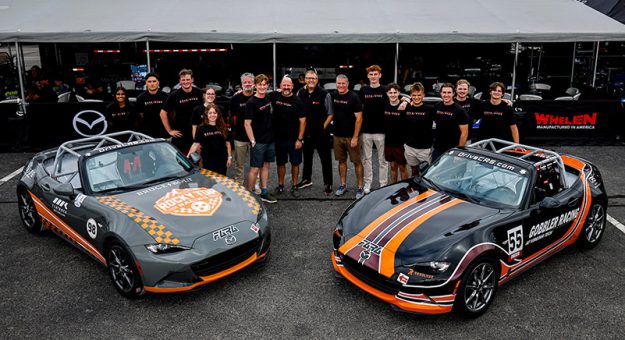
Last weekend at VIR, CRS Mazda MX-5 race cars representing Virginia Tech and the University of Tennessee — two of more than 80 colleges and universities currently participating throughout the CRS program — were on display in the paddock, highlighting the hands-on learning opportunities that are central to the new initiative.
As part of the program, IMSA will provide internship opportunities in engineering and partnership marketing for qualified students, subject to IMSA business needs and applicable policies. The inaugural internship recipients will be announced during IMSA’s annual State of the Sport presentation on Oct. 1 ahead of the season-ending Motul Petit Le Mans at Michelin Raceway Road Atlanta.
CRS, the “National Championship for Collegiate Motorsports,” is a platform that provides students with practical experience through the design, preparation, operation and management of race programs. Other notable colleges and universities participating in CRS include UCLA, University of Florida, North Carolina State University, Purdue University, Rutgers University, University of South Carolina and Texas A&M among many others.
Together, IMSA and CRS have jointly established NABME to help ensure academic programs more closely reflect the skills, experiences and professional expectations required throughout today’s motorsports industry.
“Motorsports continues to evolve at an incredible pace, and developing the next generation of industry professionals is vital to sustaining that growth,” said IMSA President John Doonan. “Through NABME, we can help bridge the gap between classroom learning and real-world experience while providing students greater visibility into the diverse career opportunities available throughout our sport.”
NABME brings together leaders from across motorsports, including engineering, race operations, manufacturing, safety, marketing and business disciplines, to help guide the development of future industry talent. The effort reinforces IMSA’s longstanding commitment to education, experiential learning and workforce development while creating additional pathways for students to gain exposure to the professional motorsports environment.
“Creating meaningful pathways between education and industry has never been more important,” said CRS President Jack Hobbs. “By bringing together educators and leaders from across the motorsports industry, NABME will help students gain practical experience, professional awareness and valuable industry connections that can support successful careers throughout the sport.”
As universities across the United States continue expanding motorsports-focused academic programs, industry leaders have identified a growing need to better align educational experiences with workforce expectations. NABME was established to address that challenge by fostering collaboration between educators and industry stakeholders while supporting curriculum development, experiential learning opportunities and workforce readiness initiatives.
Central to the effort is the belief that successful preparation for careers in motorsports requires more than technical knowledge. Students benefit from exposure to real-world systems, team environments, regulatory frameworks and the fast-paced decision-making processes that are critical to modern racing operations.
IMSA and CRS leadership will participate in a joint NABME steering committee focused on workforce development, student engagement and long-term program growth. The organizations will conduct quarterly reviews and annual planning sessions to assess progress and identify future opportunities.
NABME’s broader objectives include supporting accreditation guidance, curriculum alignment, skills-gap assessments, experiential learning best practices and workforce pathway development. The initiative is guided by principles that include industry relevance, hands-on experience, safety, leadership, collaboration, accessibility and continuous improvement.
Additional updates regarding student participation opportunities and future NABME programs are expected later this year.